Free Shipping on Orders Over $800 | Become a customer!
Menu title
This section doesn’t currently include any content. Add content to this section using the sidebar.
Your headline
Image caption appears here
Add your deal, information or promotional text
China has become a major sourcing base for adult wellness products, including the Ball Gag category. Global buyers now expect more than competitive pricing. They require stable materials, documented inspections, traceable production, and responsible packaging.
Market research supports this shift. Grand View Research’s 2024 global sex toys market analysis identifies continued expansion, driven by e-commerce, product innovation, and changing consumer attitudes. Fortune Business Insights reports similar growth expectations for the wider market. However, these reports rarely separate Ball Gag sales from broader product categories. That limitation matters. It means buyers should avoid unsupported market-size claims and evaluate suppliers through measurable evidence.
Reliable Chinese manufacturers usually provide material specifications, batch records, and pre-shipment inspection options. Look for body-safe material declarations, smooth edges, secure fastening systems, and clear cleaning instructions. Independent laboratories such as SGS, Intertek, or TÜV can verify selected properties, but testing is not the same as universal product certification. Buyers should also review applicable requirements under destination-market frameworks, including chemical restrictions, packaging rules, labeling duties, and consumer-product safety obligations.
Safety comes first.
A responsible supplier should promote adult use, informed consent, suitable sizing, and immediate removal if discomfort occurs. Product photography should show construction details rather than exaggerate performance. This guide examines China’s leading Ball Gag manufacturers through quality systems, customization capability, export experience, communication standards, and evidence-based compliance practices. Some supplier claims may remain difficult to verify publicly. That is why factory audits, sample testing, and written specifications remain essential before any global purchasing decision.
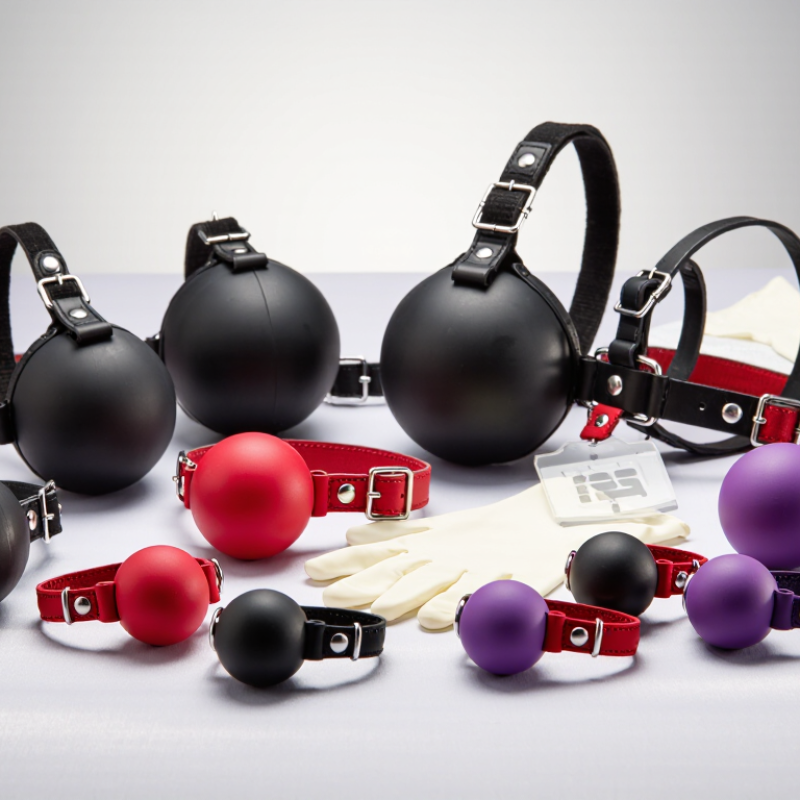
China’s ball gag manufacturing scope extends beyond finished products. Factories commonly provide OEM and ODM services, including mold design, material selection, assembly, inspection, and export packaging. Product types may include silicone-covered designs, TPE models, stainless-steel versions, and adjustable strap systems. Each material changes durability, cleaning requirements, and unit cost.
Grand View Research estimated the global sexual wellness market at about USD 35.3 billion in 2022. It also projected an 8.3% compound annual growth rate from 2023 to 2030. This data suggests wider demand, but it does not measure ball gags separately. That limitation matters. Suppliers should avoid using broad market figures as direct product forecasts. Manufacturing scope also includes private labeling, small-batch sampling, color matching, and packaging localization. Reliable factories should provide material declarations, batch records, and third-party test reports where required.
Tips: Ask for samples before approving mass production. Check surface finish, strap stitching, odor, and packaging accuracy. Confirm that materials are clearly identified and suitable for the intended use. A design review should also consider airflow, quick-release features, and safe user instructions. These details can expose weak engineering early. Some suppliers still focus on appearance more than practical safety. Buyers should challenge that habit and document every acceptance standard in writing.

Evaluating China’s Top Ball Gag Manufacturers
A reliable evaluation starts with material transparency, not attractive product photos. Ask whether the mouthpiece uses body-safe silicone, food-grade materials, or another documented compound. Request recent test reports for chemical safety, tensile strength, and odor control. A responsible supplier should explain cleaning instructions clearly. Vague answers deserve caution.
Factory capability matters as much as product design. Review production photos, quality-control procedures, and sample consistency. Compare several samples for surface smoothness, strap adjustment, stitching, and packaging accuracy. Check whether each batch has traceable records. Small defects can become serious safety concerns. Do not rely on one perfect sample.
Communication reveals professional maturity. Manufacturers should provide clear specifications, realistic lead times, minimum order quantities, and defect-handling policies. Confirm discreet packaging and neutral shipping documents where legally permitted. They should also understand age restrictions, consent standards, and destination-market requirements. Written evidence is better than promises. A polished catalog proves little. Remote audits help, but they cannot replace independent testing. Buyers should remain open to changing suppliers when documentation is incomplete.
| Evaluation Dimension | What Global Buyers Should Verify | Recommended Evidence | Suggested Weight | Practical Benchmark |
|---|---|---|---|---|
| Material Safety | Confirm the ball, strap, hardware and any coating are made from clearly identified materials suitable for intended skin contact. | Material specification sheet, supplier declaration, batch traceability and independent laboratory test report for the finished product. | 20% | Material composition should be specific rather than described only as “eco-friendly” or “premium.” Test reports should identify the tested sample and report date. |
| Chemical Compliance | Assess whether the product and packaging meet the destination market’s chemical restrictions. | Recent third-party reports covering applicable requirements such as REACH Regulation (EC) No. 1907/2006 and, where relevant to the product’s components, RoHS Directive 2011/65/EU as amended by Commission Delegated Directive (EU) 2015/863. | 15% | Reports should match the current product version, list test methods and limits, and be issued by a laboratory that can be independently verified. |
| Design and Safety Features | Review ventilation, quick-release functionality, edge finishing, strap adjustment, closure security and the absence of sharp or detachable hazards. | Engineering drawings, product risk assessment, prototype inspection photographs and physical pre-shipment samples. | 15% | A wearable design should include an effective breathing route and a reliable quick-release method; final approval should be based on a physical sample, not photographs alone. |
| Dimensional Consistency | Check ball diameter, strap length, adjustment range, hardware size and packaging dimensions against the approved specification. | Signed technical drawing, inspection checklist, first-article approval record and statistical or lot-based inspection results. | 10% | Critical dimensions should have written tolerances. Any deviation from the approved sample should require buyer approval before mass production. |
| Quality Management | Evaluate whether the factory controls incoming materials, production steps, final inspection, nonconforming goods and corrective actions. | Quality manual, process-control records, inspection standards, corrective-action reports and an auditable ISO 9001 certificate where claimed. | 10% | An ISO 9001 certificate should show the legal entity, certificate scope, validity period and certification body; certification should not replace product testing. |
| Factory Verification | Confirm that the actual production site, legal entity, capabilities and subcontracting arrangements match the supplier’s declarations. | Business registration details, factory address, live video or on-site audit, production photographs and disclosed subcontractor list. | 10% | The contracting entity, payment recipient and manufacturing location should be consistent and documented before an order is placed. |
| Order Flexibility | Compare minimum order quantity, sample policy, customization limits, packaging options and artwork requirements. | Written quotation, sample invoice, packaging specification, customization drawing and clearly stated tooling or setup charges. | 8% | All one-time fees, sample charges, mold ownership terms and minimum quantities should be stated in writing before approval. |
| Production and Delivery Control | Assess capacity planning, production scheduling, inspection timing, export documentation and communication during the order cycle. | Production schedule, inspection booking process, carton and packing list template, shipping terms and documented escalation contact. | 7% | The purchase order should define the production lead-time trigger, inspection point, packing requirements and process for handling delays. |
| Packaging and Discretion | Review retail packaging, shipping cartons, product labeling, barcode placement and neutral outer-carton requirements. | Packaging artwork, carton markings, label content, drop-test or packaging inspection record where required, and approved pre-production sample. | 3% | Packaging should protect the product, avoid unauthorized claims and comply with the destination market’s labeling and import requirements. |
| After-Sales Support | Evaluate procedures for defects, replacements, refunds, complaint handling, spare parts and future product revisions. | Written warranty terms, defect classification table, response-time commitment, replacement policy and complaint tracking procedure. | 2% | The agreement should define acceptable quality limits, evidence requirements, claim deadlines and the corrective-action process. |
| Recommended buyer assessment model | 100% | Use document review, sample inspection and factory verification together; no single certificate or low quotation should determine supplier selection. | ||
Material selection should begin with traceability, not appearance. Reputable manufacturers identify silicone, TPU, ABS, and metal components by batch. Platinum-cured silicone can offer a smooth surface and stable flexibility when properly formulated. However, “body-safe” is not a complete technical claim. Buyers should request composition records, migration testing, and relevant ISO 10993 biological evaluations from independent laboratories.
Chemical compliance also requires regular screening. The European Chemicals Agency reported that its 2023 enforcement project found non-compliance in about 18% of inspected products across several restriction areas. That figure does not specifically measure ball gags, but it shows why supplier declarations alone are insufficient. REACH substance screening, heavy-metal testing, odor checks, and surface inspections should be documented for every production batch. Small defects matter.
Quality control should cover the entire product, including the strap, fasteners, seams, and ventilation design. Pull testing and repeated-flex tests can reveal failures that visual inspection misses. ISO’s 2022 Survey recorded more than one million ISO 9001 certificates worldwide, yet certification does not guarantee perfect product quality. An audit is only a snapshot. I would still require batch samples, corrective-action records, and retained samples before shipment. Packaging should protect clean surfaces and provide clear material and care information. Some factories may resist these checks. That hesitation deserves attention.
China Top Ball Gag Manufacturers for Global Buyers
OEM production gives global buyers control over material, dimensions, color, packaging, and surface finish. Common options include body-safe silicone, stainless steel, and adjustable fastening systems. Buyers should request material certificates and product samples before approving bulk production. A small sample may look perfect, yet the final batch can reveal uneven edges or inconsistent color.
Customization usually begins with a technical drawing and packaging brief. Suppliers can add private labels, barcode stickers, instruction cards, and multilingual warnings. Confirm whether tooling, sampling, printing, and testing fees are included in the quotation. Pricing depends on material grade, order quantity, packaging complexity, inspection standards, and shipping terms. A low unit price is not always economical. Weak quality control can create returns, delays, and regulatory problems.
Minimum order quantities often range from 300 to 1,000 pieces, depending on customization and packaging. Stock colors may require fewer units. Custom molds usually require more. Ask for a complete cost breakdown, production timeline, and payment schedule. Reliable manufacturers should provide factory information, batch records, inspection procedures, and clear communication. Buyers must also check destination-market rules for adult products, age restrictions, labeling, chemical safety, and import documentation. Requirements differ widely. This part is easy to underestimate. A written compliance checklist can prevent expensive revisions, although it cannot replace professional legal advice.
The chart presents typical OEM minimum order quantity ranges commonly used in China sourcing for different ball gag material options. Silicone and leather products generally support flexible customization, while metal designs may require higher tooling or finishing requirements. Actual MOQ, unit pricing, sampling fees, and lead times should be confirmed with each supplier.
China Top Ball Gag Manufacturers for Global Buyers
Experienced global buyers assess more than product price when sourcing ball gags from China. They check material declarations, production consistency, packaging quality, and export documentation. Products should be clearly designed for adults and labeled with appropriate age warnings. Buyers should also confirm whether silicone, rubber, metal, or mixed materials meet destination-market requirements.
Reliable suppliers usually provide samples, inspection support, commercial invoices, packing lists, and shipment tracking. They should explain minimum order quantities, production lead times, payment terms, and accepted Incoterms. Ask for batch records and independent test reports when available. Clear photographs of packaging and carton markings can prevent customs delays. Small details matter.
Laws differ between countries and sometimes between regions. Buyers must verify import rules, labeling duties, advertising limits, and restricted-material requirements before ordering. A supplier may understand Chinese export procedures but know little about your local regulations. That gap deserves attention. I would not trust a polished catalog alone. Sample approval, factory communication, and pre-shipment inspection provide stronger evidence, although none removes every risk. Some suppliers may also need guidance on neutral packaging, accurate product descriptions, and responsible warehouse handling. Feedback should remain specific, because vague promises rarely improve quality.
We use cookies on our website to give you the best shopping experience. By using this site, you agree to its use of cookies.